
Our Work
Our approach to deliberate dialogue is grounded in years of practice, patience and principles, guided by our theory of change.
Our Process
There is no one single Deliberate Dialogue blueprint. But there is always intentionality, creativity and aligned purpose. We do have a tried and tested iterative methodology that we adapt to each of the unique dialogue processes we curate.
1. Design the Experience
We co-create a purposeful agenda along with our institutional conveners, defining key criteria, participants, inputs and shared goals.2. Kick Off with Your "Dialoguers"
Onboard participants and introduce the process with preparatory materials and exercises, cultivating commitment to carry the conversation forward.3. The RSB Method — Reflect. Share. Blend.
A pre-event written exchange that gets participants reflecting on the challenge, sharing perspectives, and weaving collective insights together.4. Set the Space
Establish a shared destination while identifying areas of divergence and welcoming new perspectives into the conversation. 5. Craft Solutions & Transition Pathways
Use formal and informal spaces — virtual or in-person — to deepen dialogue and create more opportunities for meaningful and repeated stakeholder connection.6. The Stress Test
Invite critical "insider-outsider" voices to challenge and pressure-test emerging solutions before they're locked in.7. Share the Outcomes
Deliver a rapid 48-hour outcome document so participants can act on insights immediately while energy is high.8. Maintain the Community
Keep connections alive through ongoing virtual spaces and future events that sustain the relationships built.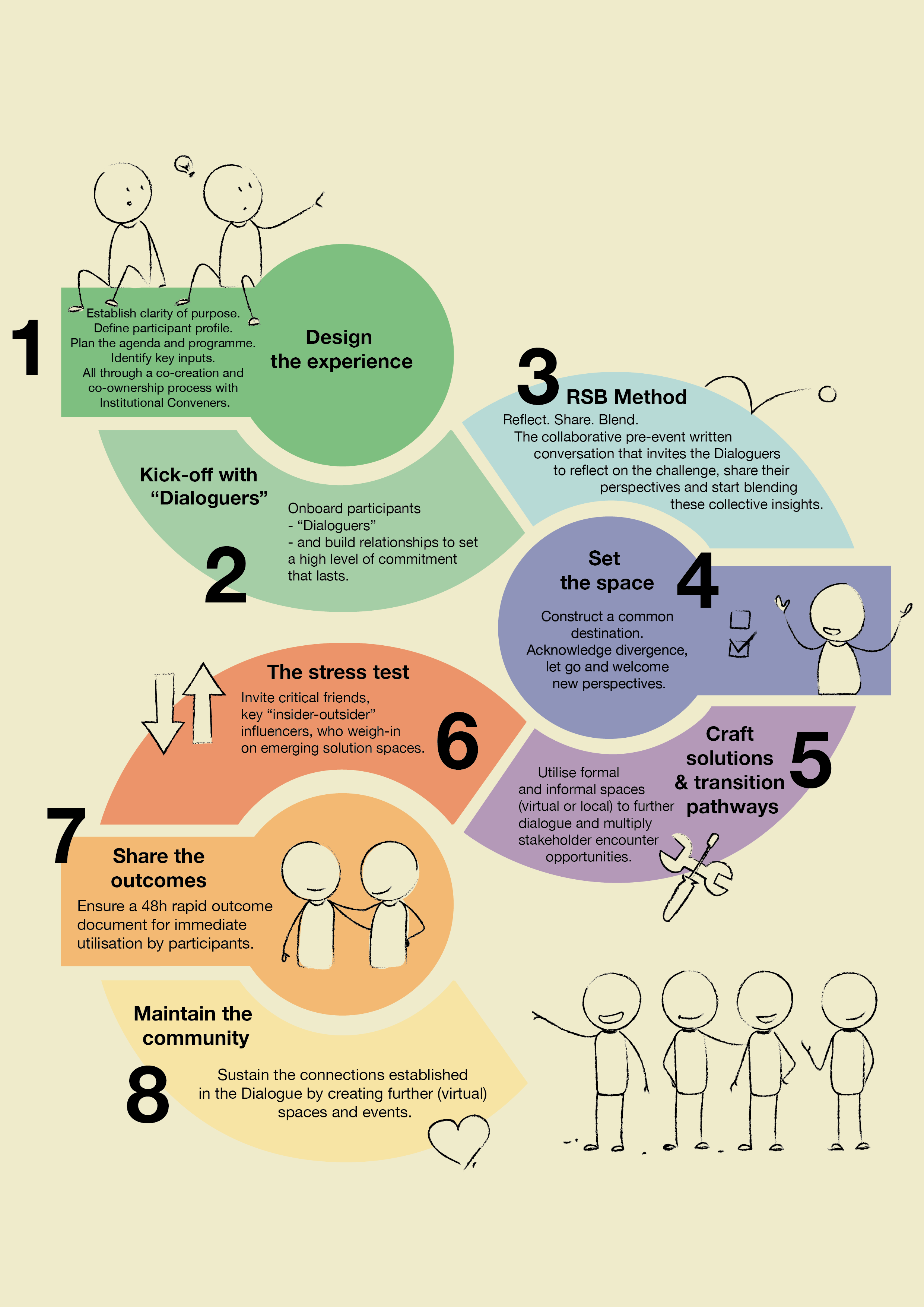
This is just a sneak peak!
To learn more about how we work, visit our Project Portfolio and read about the purpose, process and results behind all our projects.
Does deliberate dialogue catalyze
transformative change?
We’re building the evidence!
Quick wins through dialogue
Shared ambition and narratives for change
Connections across people, expertise, and knowledge systems
Communities of Practice and Collaborative platforms
Dialogue capacity-building
Theory of Change: thinking and impact pathways
Mid-term transformative change
Behaviour change towards collaborative, open, inclusive and active listening posture
Stronger transformative partnerships and collaborative capacity
Correcting power asymmetries
Adoption of Deliberate Dialogue as a transformative approach
Bolder leadership and more inclusive decision making
Organisational, policy and practice shifts
Long-term amplified impacts
More just and resilient systems
Rebalanced power and greater social and environmental justice
Enduring science-policy-society collaboration
Transformation of water, land, food, and climate systems
Policy and practice change
Sustainable investment in long-term transformation
Building Risky Safe Spaces
Deliberate dialogues are not your typical quarterly all-hands meetings or an ordinary conference. Most gatherings are designed to inform or confirm. Risky safe spaces are designed for something harder, but more valuable: to surface what usually goes unsaid, to sit with complexity, and to move through it together.At Convene, we don't simply assemble people or meetings. We build environments where ideas are meant to be raised, challenged, and elaborated. Where disagreement is an input, not a distraction and where the uncomfortable questions and uncertainties in the room finally get asked and taken seriously.We call these spaces "risky" because real dialogue requires courage: to speak honestly, have your assumptions tested, and leave thinking differently. But they are also "safe" because that risk is held carefully through intentional design and facilitation that make it possible to go to difficult places without people shutting down or walking away.Every Convene dialogue is purpose-built. We work closely with partners to design processes that match the complexity of the challenge — curating who is in the room, how conversation flows, and what conditions need to be in place for genuine exchange to happen. By intentionally asking the difficult questions and grappling with difficult power dynamics, we create a unique space where all participants are given equal footing to listen and to share, even where they may not see eye to eye.
Deliberate Dialogue Toolkit
-
![Hybrid Dialogue Guide]()
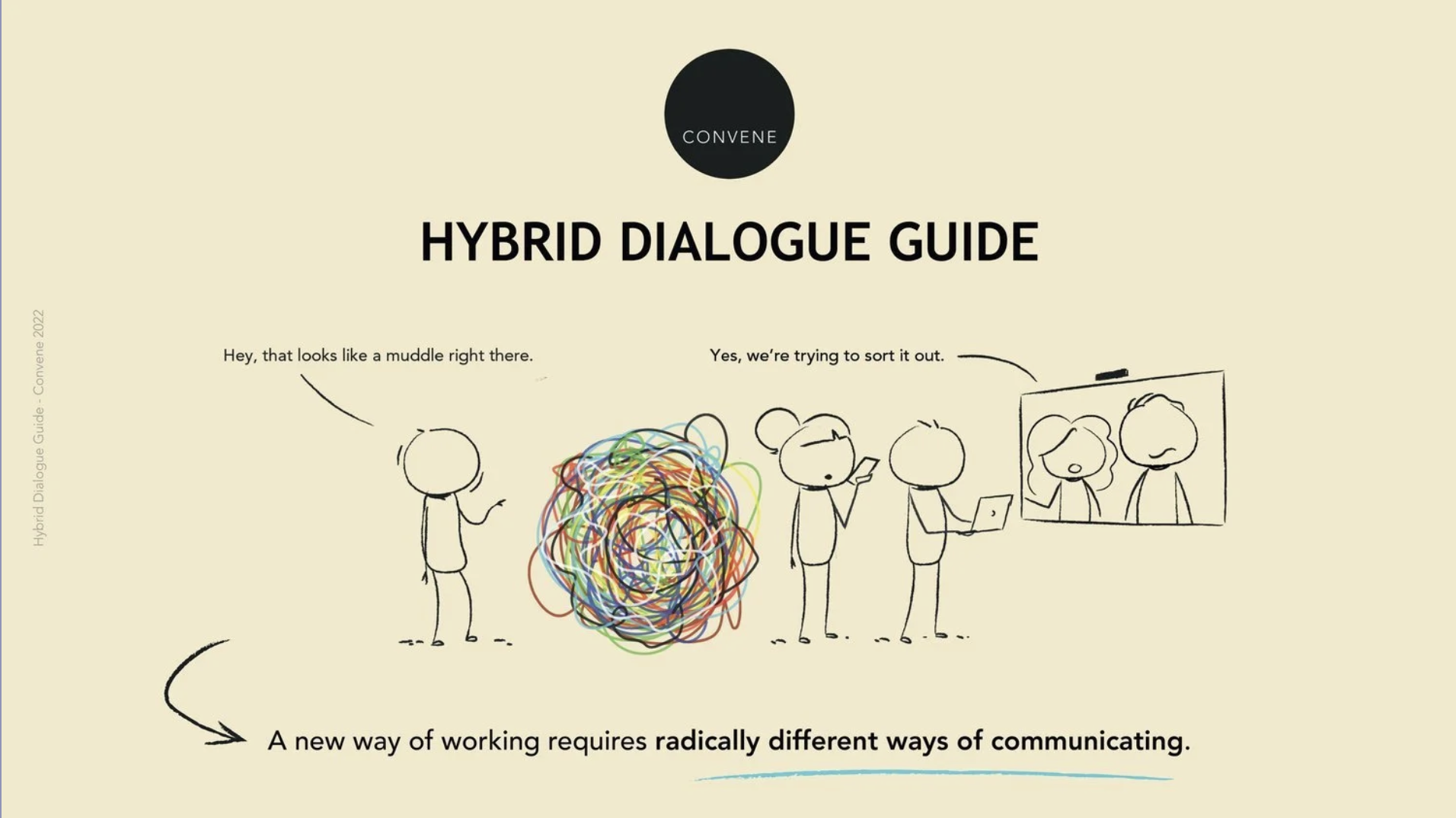
Hybrid Dialogue Guide
The future is one of adaptability and flexibility. As we mold new pathways forward, one thing remains certain: connection and collaboration are vital to our collective success.
We’ve spent the last years adapting our unique methodology to craft bold spaces for brave dialogue in the new world of hybrid collaboration, engaging in both physical and virtual arenas simultaneously.
We’ve created this Hybrid Dialogue Guide to assist us in our work of accompanying individuals and institutions through deliberate dialogue in our curated spaces. These spaces are often intimate, with an average of thirty dialoguers committing to a number of days of fully-engaged presence and transformative conversation. Keeping in mind this context, a hybrid-blended format becomes a serious option. -
![]()
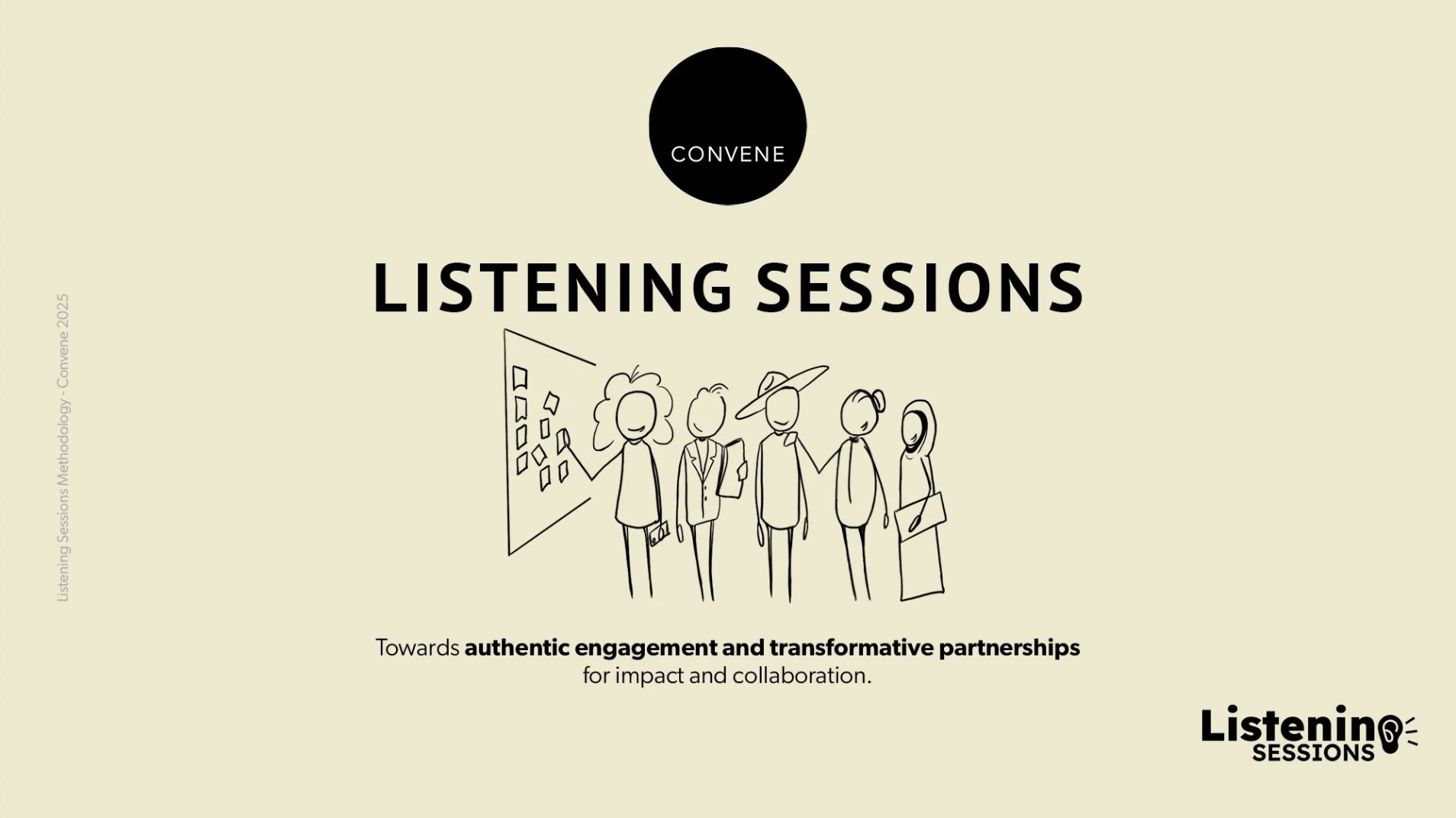
Listening Sessions Guide
The world is dealing with a convergence of interconnected challenges that require organisations to dismantle their siloed approaches and foster inclusive, collaborative and system-oriented solutions for long-term impact.
Listening Sessions (LS) offer a key opportunity for activating this transformation process. Convene developed this open-access, adaptable methodology together with our partners to maximise quality collaboration and impact within a specific ecosystem in response to a shared challenge.
LS ask “how can we do better together”and emphasize listening over posturing. This change challenges established power dynamics and brings about authentic connection, engagement and collective action. -
![]()
Sensemaking Guide
One of Convene’s signature offers is our sensemaking capacity: the ability to capture intelligence, record insight, make connections and feed them back into the conversation in live time.
While our team brings years of practice, we also help recruit and train participant sensemakers in every dialogue we design. We’ve created this sensemakers guide to help train a wider audience in understanding how we work to support dialogue before, during and after the conversation takes place.